

Case Summary
In January 2008, 34-year-old Sarah Melia lived on Catherine Street West in Horwich, Greater Manchester, with her two children, 15-year-old Meghan and ten-year-old Ethan. Sarah and the children’s father, Stuart, had divorced several years earlier but remained in contact. Nothing about the morning of Monday 14 January suggested that the family was about to be torn apart.
Sarah was recorded inside the convenience store opposite her home at 8.14am. When Ethan complained of stomach pains, she took him to Hooton’s Pharmacy on Lee Lane. CCTV captured them walking there at 9.39am. Ethan decided that he felt well enough for school, and mother and son separated outside the pharmacy. Footage showing Sarah crossing Lee Lane at 10.02am, beginning the short walk back to Catherine Street West, became the last confirmed image of her alive.
At 10.12am, Sarah spoke by telephone to her former partner, James Christian, and arranged to meet him for lunch at noon. They never met. Christian was questioned in the first days of the investigation, but CCTV placed him at a probation appointment in Bolton town centre at 10.30am, when police believed Sarah had already been attacked. He was eliminated from the inquiry.

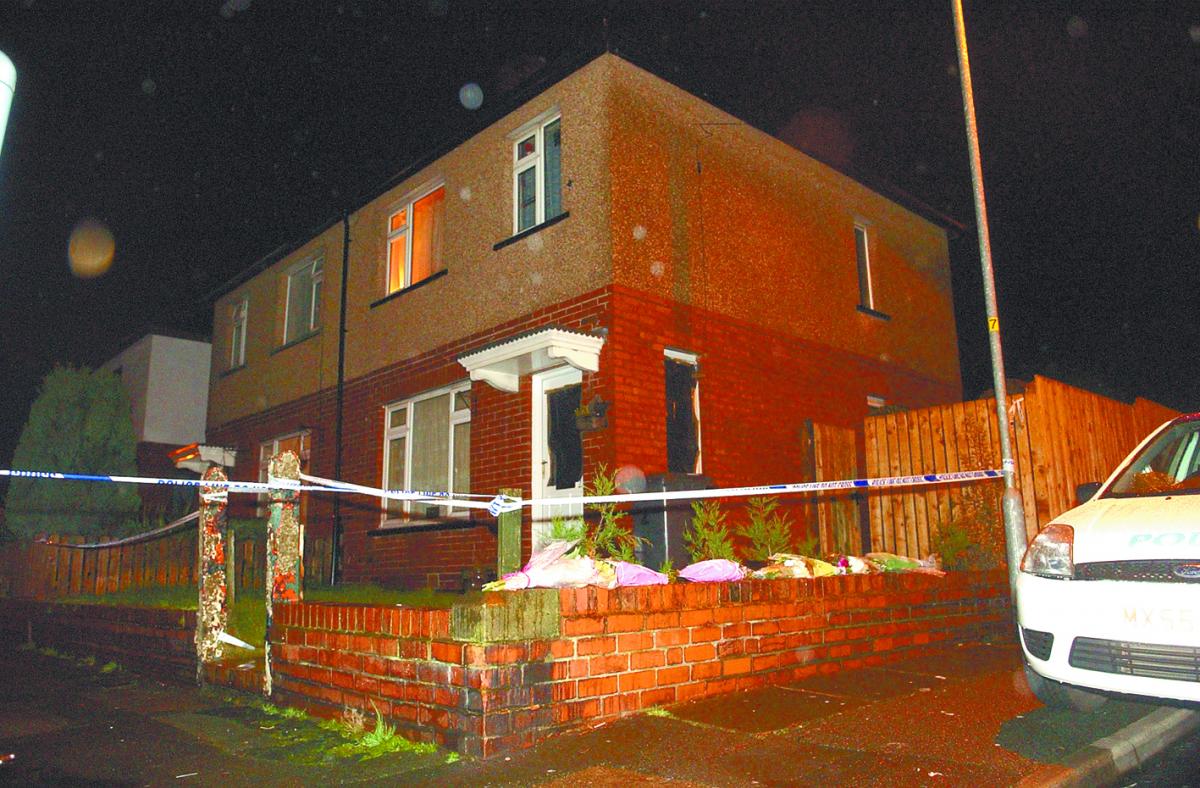
Murder behind the front door
Shortly before 3.30pm, Meghan returned from school and noticed what appeared to be blood on the inside of the front-door window. Inside, she found her mother lying at the foot of the stairs. After touching Sarah’s hand and realising that she was dead, the frightened teenager ran into the street calling for help before managing to telephone the emergency services.
There was no sign that anyone had forced a way into the house. Investigators therefore believed Sarah had opened the door to her attacker, probably shortly after she returned from the pharmacy. A neighbour who went into the convenience store at about 10.15am saw a man approach Sarah’s house and later heard raised voices. Police placed the killing within a narrow period that morning.
Sarah had been stabbed six times in the back and had four shallower wounds to the front of her chest. Two of the wounds entered her chest cavity and damaged her right lung, diaphragm and liver. Clumps of hair found on the stairs led prosecutors to suggest that she may have tried to escape upstairs before being pulled back down, although the precise sequence of the attack could not be established.
The murder weapon was recovered within days from the flat roof of a building on Mary Street East, around 75 yards from Sarah’s home. The eight-inch kitchen knife carried DNA matching Sarah. Its location indicated that the attacker had escaped through the alleyways behind Catherine Street West. A brown TV Licensing envelope was also recovered from the house, and detectives believed it may have been used to conceal the knife while it was being carried to the scene.
“Somebody must know something. We never lose that hope and we owe it to Sarah to keep fighting for justice and closure.”
Marion, Sarah’s mother
The man in the red coat
Cameras in Horwich recorded a man whose clothing matched the neighbour’s description. Shortly after 10.15am, he was seen walking along Lee Lane and turning towards Sarah’s street. He wore a bright red coat, a black hat, blue jeans and white trainers, and appeared to be carrying an envelope. His hurried walk was distinctive: his head remained lowered while his left arm swung away from his body.
At 10.46am, a similarly dressed man was filmed on Lee Lane travelling away from the area, approximately half a mile from Sarah’s home. Police released the images nationally and repeatedly asked him to identify himself. They also sought a second man, described as slim and fair-haired, who had been seen near the house between 1pm and 2pm. Public reporting has never confirmed that either man was conclusively traced.
Sarah’s case was featured on Crimewatch in March 2008. Meghan and Ethan spoke movingly about their mother while detectives again showed the red-coat footage. More than 20 calls followed, including claimed sightings, but none publicly produced the identification police needed. The clothing, the route and the object in the man’s hand made him central to the inquiry, but the pictures were too indistinct to establish his identity on their own.

Three trials and an acquittal
Before the CCTV was released, detectives showed it to Sarah’s mother, Marion Kitchen. She believed the man in the red coat was her son and Sarah’s brother, Mark Kitchen. Other people who knew him, including an aunt and a neighbour, later expressed the same opinion. Kitchen was arrested during the investigation and, in June 2008, was charged with Sarah’s murder. He denied the allegation.
The prosecution relied heavily on the visual identifications and argued that the envelope found inside Sarah’s home had been used to transport the knife. The court also heard that Kitchen had become estranged from Sarah and their mother. These circumstances formed part of the prosecution case, but recognising a person in poor-quality CCTV is not the same as proving identity, and the publicly reported evidence did not establish a conclusive forensic link between Kitchen and the knife or the crime scene.
Kitchen’s first trial began at Manchester Crown Court in December 2008, but the jury was discharged after five days. A second trial reached the deliberation stage before an extraordinary problem emerged. One juror was a serving Greater Manchester Police officer who had previously been copied into correspondence concerning Kitchen and had communicated about his assessment. The connection had not been properly disclosed when the jury was selected. Judge Andrew Gilbart concluded that the trial could not safely continue and discharged the jury.
A third jury was sworn in. On 15 May 2009, after approximately two and a half hours of deliberation, it found Mark Kitchen not guilty. The verdict cleared him of Sarah’s murder and must be treated as such: suspicion, family recognition and a prosecution are not a conviction. After almost a year in custody and three court proceedings, Kitchen was released.

The unanswered questions
Following the acquittal, Greater Manchester Police returned to the unresolved question of the man in the red coat. No alternative suspect or motive has since been announced publicly. The knife offered proof of how Sarah was killed and the CCTV provided a possible route to and from her home, but neither has produced a name that investigators can safely attribute to the murder.
Sarah’s mother has continued to appeal for information on successive anniversaries. In January 2025, she said the family still moved between hope that an answer might finally come and disappointment when another year passed without one. She has consistently argued that somebody must know something and that the family owes it to Sarah to continue seeking justice and closure.
Greater Manchester Police’s cold-case team has said that no murder inquiry is ever simply forgotten and that even information which appears insignificant may matter when placed beside the existing evidence. Sarah’s children have had to grow into adulthood without their mother, while those closest to her are still left with the two questions identified by her family years ago: who entered her home that morning, and why did they kill her?
“No case is ever closed. We encourage anyone who thinks they may have information — no matter how big or small — to come forward and speak to us. We will listen to you.”
Detective Sergeant Clare Smith, Greater Manchester Police Cold Case Unit