
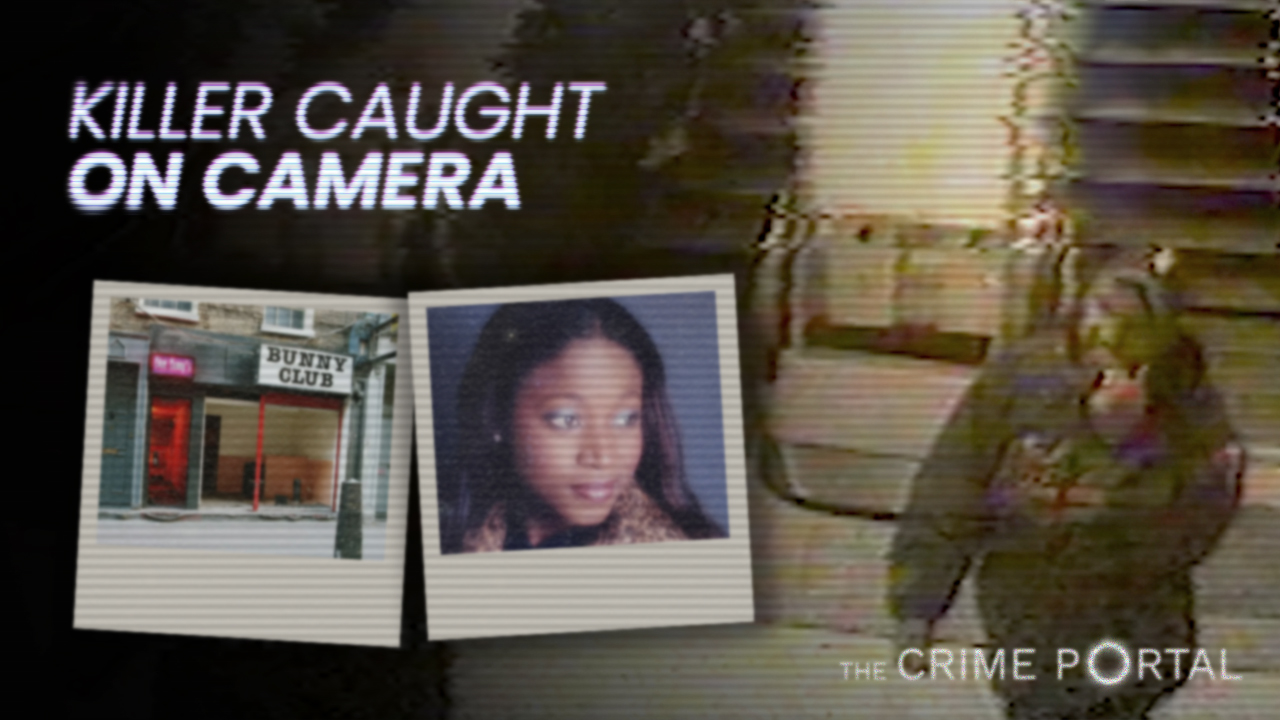
Case Summary
Camille Gordon came to Britain from Jamaica in 2001, when she was 20 years old. She was close to her mother, Doet, and to her older sister, Debbie, and moved with a clear ambition: she wanted a better education and hoped eventually to become a teacher.
She first lived with an aunt in Handsworth, Birmingham. While studying early-years development and care at Handsworth College, she worked as an assistant in nurseries around the city. About a year later she moved to Croydon to live with a cousin. London was expensive, and nursery work did not provide enough money to live on and send help home, so Camille looked for extra work in the capital’s restaurants, bars and clubs.
In December 2003 she began working as a hostess at the Blue Bunny Club in Soho. Friends and colleagues remembered her as confident, generous and easy to like; one former colleague said Camille had taken her under her wing when others were unkind. The money was better, but Camille had not abandoned her original plans. She was waiting to begin the next course she needed for an early-years qualification and a career in nursery education.

The Blue Bunny and Soho’s “clip joints”
The Blue Bunny at 7 Archer Street was one of the “clip joints” then operating around Soho. Such businesses advertised the atmosphere of a strip club or adult venue, but made their money by luring men inside and presenting them with enormous bills after a brief conversation with a hostess. A customer might pay a small admission charge, spend ten minutes in a private room and then be told he owed hundreds of pounds. Bouncers were on hand to apply pressure if he refused.
The system survived partly by exploiting gaps in licensing and consumer law. Many venues did not serve alcohol and described themselves as private members’ clubs. Complaints about their prices were frequently treated as civil disputes rather than fraud. Hostesses, meanwhile, were placed on the street or in club doorways to bring customers in. They became the public face of a business model they did not control, leaving them exposed to the anger of people who felt cheated.
That danger became tragically clear on Monday 1 March 2004. At about 6.20pm, Camille spoke to a passing man while sitting outside the Blue Bunny and persuaded him to enter. He was described as a Black man in his mid-twenties, around 5ft 6in to 5ft 8in tall. He paid a £5 entrance fee and spent roughly ten minutes talking to Camille before a bouncer presented him with a bill for £375. After an argument, the club accepted £80 and the man left.

Three returns to Archer Street
The customer walked towards Rupert Street and was seen using his mobile telephone. He returned to the Blue Bunny a short time later, when a different hostess was outside. Witnesses said he raised his hands in a submissive gesture and walked away again.
Shortly after 7pm he came back for a third time. Camille was standing in the doorway. As he approached, he quickened his pace and stabbed her once in the chest. He pulled out the knife and ran south-west along Archer Street before turning into Great Windmill Street.
Camille managed to stagger down the club’s stairs, where colleagues found her bleeding heavily. Paramedics took her to University College Hospital, but the wound had pierced her heart. She was pronounced dead at 8.25pm. She was 23 years old.
The Blue Bunny closed while police examined the premises. Flowers soon covered its shutters. Camille’s family had not known the nature of her club work; they knew the affectionate, upbeat young woman who loved dancing, stayed in regular contact and intended to work with children. Debbie later said that responsibility for the murder belonged to the man who used the knife, while also warning that clip joints were placing women like her sister in danger.
“She was a wonderful, happy, upbeat kind of person who loved to dance and made so many people happy.”
Doet Gordon, Camille’s mother
A suspect captured but never named
Witness accounts led detectives to identify the disgruntled customer as the principal suspect. One detail made him particularly recognisable: he wore a Cleveland Indians baseball jacket, with the team name across the front and its logo on the left sleeve. The jacket was so unusual in Britain that police later had to obtain an example from the United States for a television appeal.
London’s extensive CCTV network allowed investigators to follow the man after the attack. Cameras recorded him running towards Piccadilly Circus Underground station, less than a quarter of a mile away, and then travelling south on the Bakerloo line. Police released still images within days. The footage showed the man they believed had killed Camille, but it did not tell them his name.
There was another possible lead. On 3 March, two days after the murder, a white man walked into Kennington police station and said he had information about the Blue Bunny killing. While the desk officer went to find an investigator, the visitor left. He was described as slim, around 5ft 8in tall, with defined cheekbones and light-brown hair. Despite repeated appeals, he has never been traced.
The case appeared on Crimewatch in May 2004, and a £20,000 reward was offered the following year. Camille’s mother and sister appealed directly to the public, while police displayed the distinctive jacket and an artist’s impression of the suspect. None of it produced the identification detectives needed. The knife was never recovered, and it remains unknown whether the killer carried it all evening or obtained it after leaving the club.
“The responsibility for this attack lies with the man who stabbed my sister.”
Debbie Gordon, Camille’s sister

Decades later...
Camille’s death intensified scrutiny of Soho’s clip joints. A multi-agency campaign against the venues had coincidentally begun the day before she was killed. Because the charging practices themselves were difficult to prosecute, authorities used fire, employment, immigration, tax and safety rules to challenge the businesses. Later licensing changes placed sexual-entertainment venues under tighter controls, and the clip joints that had once been an open secret around central London gradually disappeared.
In 2024, the Metropolitan Police made a renewed appeal on the twentieth anniversary of the murder. Fourteen seconds of CCTV footage were released, the £20,000 reward was renewed and the case was reconstructed for Crimewatch Live. Detectives again displayed the baseball jacket and asked the unknown visitor to Kennington police station to make contact. They also appealed to anyone whose loyalties or circumstances had changed over two decades—someone who recognised the suspect, heard a confession or knew why he had been carrying a knife.
The images make this a particularly frustrating unsolved case. Camille’s killer was recorded moving through one of the busiest and most heavily watched parts of London, yet he has remained anonymous. Solving the murder depends on someone connecting that footage and the rare jacket to a person they knew. Until that happens, Camille’s family are left without an answer for why her plans, her work with children and the life she was building were ended over an £80 dispute.
