
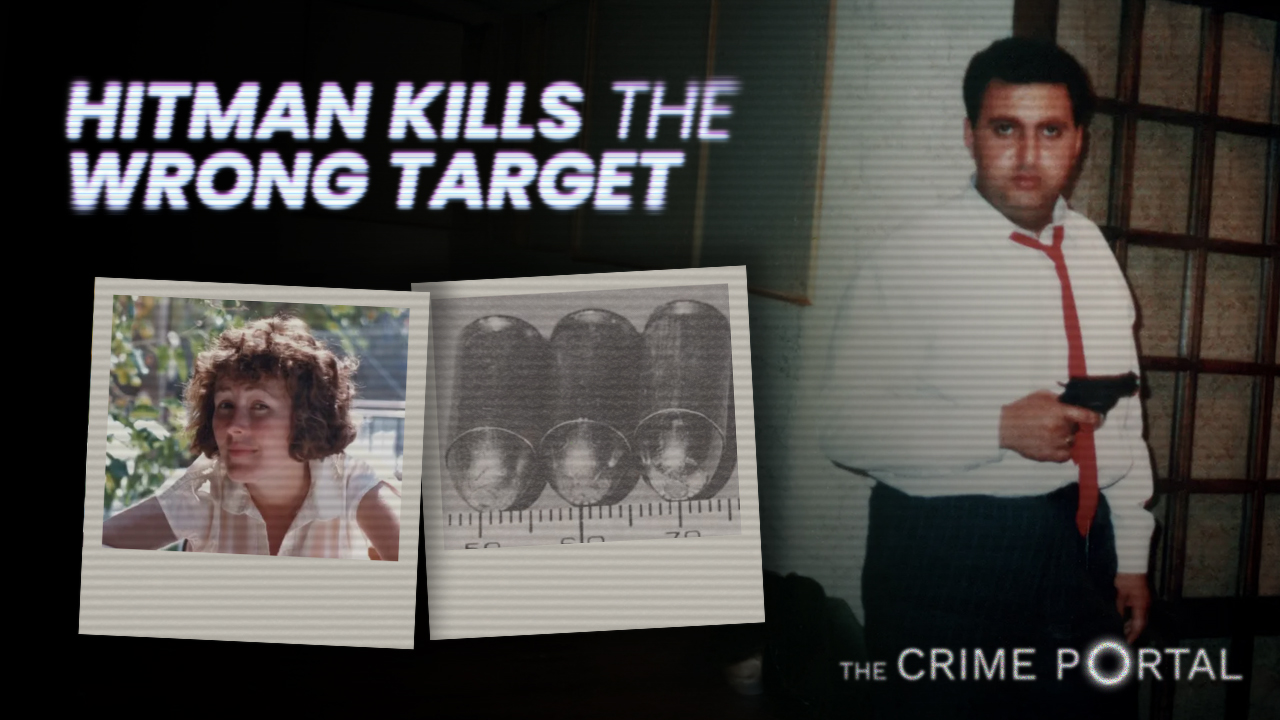
Case Summary
On 15 April 1994, police in Woking tried to stop a red Vauxhall Cavalier. The driver accelerated away, mounted a kerb and abandoned the running car before escaping. It had been stolen and given false plates, but what officers found was more alarming than car theft.
Inside were a silenced Hungarian PA-63 handgun, ammunition and a rare replica SAS-style knife. The bullets had been hollowed out, filled with mercury and resealed with wax. Police also recovered spare clothing, a blue Delsey flight bag and a map marking the route from the A3 to Woking. The Barnesbury Farm estate was circled, with “H” and “P” written inside.
Detectives feared that the man had been on his way to kill someone on the estate. Door-to-door enquiries identified residents at five properties who might conceivably be at risk. Panic buttons linked to the police station were installed, patrols were increased and those residents were warned not to open the door to unexpected callers.
One of those houses was 31 Willow Way, the home of 33-year-old geophysicist Karen Reed. She had no known enemies. The concern arose because her younger sister, Alison Ponting, was staying with her—and Alison’s husband had recently been convicted in an extraordinary double-murder case.

Five shots at the front door
On Saturday 30 April, Karen and her friend Ann Smith spent the evening at Willow Way talking, drinking wine and watching television. At about 9.15pm, a man knocked at the door carrying a blue-and-white pizza box. He asked whether they had ordered a pizza. When Karen said no, he checked whether the address was number 31. She confirmed it and opened the door.
The caller produced a .38 revolver and fired five times. He then ran to a waiting car and drove away. Ann rushed upstairs to find the panic alarm, but could not locate it. By the time she returned, Karen was lying on the floor. She had died before an ambulance could help her.
Police believed the gunman was a professional who had mistaken Karen for Alison. He was described as about six feet tall and 35, slim to medium in build, with short dark hair, silver-rimmed glasses and a British accent. Investigators thought he was also the man who escaped from the Vauxhall, although descriptions differed. Karen was not shot with mercury-filled bullets, but police regarded the car as evidence of an earlier attempt on the same intended target.
Alison was moved to a secret location under armed guard, later joined by her parents and brother. Karen’s funeral at St Mary’s Church in Horsell was held amid similarly tight security, with police controlling access and searching nearby paths and undergrowth.
“It had all the hallmarks of a professional killing.”
Detective Superintendent John Stewardson, Surrey Police

The killings behind the suspected motive
Karen and Alison were born in what was then Rhodesia, where their father David Ponting worked in education. The family returned to Britain in 1971. Karen studied geology at Sheffield University and later married Julian Reed. Alison studied languages at Manchester before joining the BBC World Service. During a university trip to Soviet Armenia in 1984, she met Gagik Ter Oganisyan, whom she married four years later.
In London, Oganisyan became involved with Ruslan and Nazarbek Outsiev, brothers connected to separatist Chechen president Dzhokhar Dudayev’s government. Alison met Ruslan through the BBC and introduced him to her husband, who became an interpreter and helped with business arrangements. Competing accounts involved oil, passports, stolen art and missiles. What is certain is that the relationship ended in murder.
In February 1993, Ruslan and Nazarbek were shot dead in their London flat with a silenced pistol. Ruslan’s body was placed in a large delivery carton and taken to a rented garage in Harrow. The men hired to move it became suspicious when the box split and gave off a foul smell. Police found the body and put the brothers’ flat under surveillance. Oganisyan and another Armenian, Mkrtitch Martirossian, were arrested after arriving with bin bags, towels and an electric saw; Nazarbek’s body remained inside.
Martirossian died by suicide in Belmarsh Prison while awaiting trial. Oganisyan denied taking part in the killings but admitted helping to dispose of the bodies. In October 1993 he was convicted of conspiracy to murder and received two life sentences. The sentencing judge called the deaths professional assassinations while observing that there was no firm reason to believe Oganisyan had personally fired the gun.
Alison was not charged in the murders and her solicitor maintained that she had known nothing about them. After her husband’s conviction, she moved in with Karen. When Karen was killed six months later, Alison said she believed she had been the intended victim because of her marriage.

“I was the person that should have been killed and the only reason for that is because I am married to Gagic.”
Alison Ponting, Karen’s sister
An investigation crossing borders
Surrey Police mounted one of the largest inquiries in its history. Detectives sought a man and woman seen with a car near Willow Way and examined the Vauxhall’s unusual contents, including the rare knife, limited-run flight bag and parking tickets from Woking station. Properties were searched in Buckinghamshire, Leicestershire and London. Several people were arrested and released without charge.
The investigation reached Moscow after information suggested Alison might have been targeted over valuable Russian artworks rather than revenge for the Outsiev murders. Detectives spoke to former KGB figures and investigated reports of threats over art worth about £1 million. Theories involving Chechen politics, Armenian intelligence, arms trading, revenge and disputed art were difficult to untangle. Police rejected sensational “Russian mafia” reports but accepted the suspected contract killing had an international context.
By 1995 the inquiry had cost more than £1 million. Eleven people had been arrested and the Crown Prosecution Service had found insufficient evidence to charge any of them. At Karen’s inquest, the coroner recorded unlawful killing. The senior detective acknowledged that the person responsible might even have been among those already interviewed.

The man in the silver-rimmed glasses
The case briefly drew comparison with the 1999 doorstep shooting of television presenter Jill Dando, but no meaningful connection was established. After years with little public activity, Surrey Police launched a fresh appeal in 2021 under Operation Lilac. Detectives said they remained convinced that others knew who had pulled the trigger or arranged the contract.
On the thirtieth anniversary in 2024, the case returned to Crimewatch Live. Police again stated that Karen had been killed because the gunman mistook her for Alison and that the abandoned Vauxhall represented an earlier attempt. Crimestoppers temporarily offered a £20,000 reward. It passed without a reported breakthrough.
Karen’s father died in 2018 without learning who had killed his daughter. Oganisyan was eventually released and deported after serving his sentence, while little has been made public about Alison’s later life or when protection for the family ended. The professional preparation evident in the weapons car, followed by the stark simplicity of the pizza-box ruse, suggests a planned operation—but not who ordered it or why. More than thirty years later, identifying the bespectacled gunman remains the clearest route to uncovering the chain of people behind Karen Reed’s murder.

Exhibit E: An artists impression of the suspect, noted as wearing distinctive silver-rimmed spectacles.