
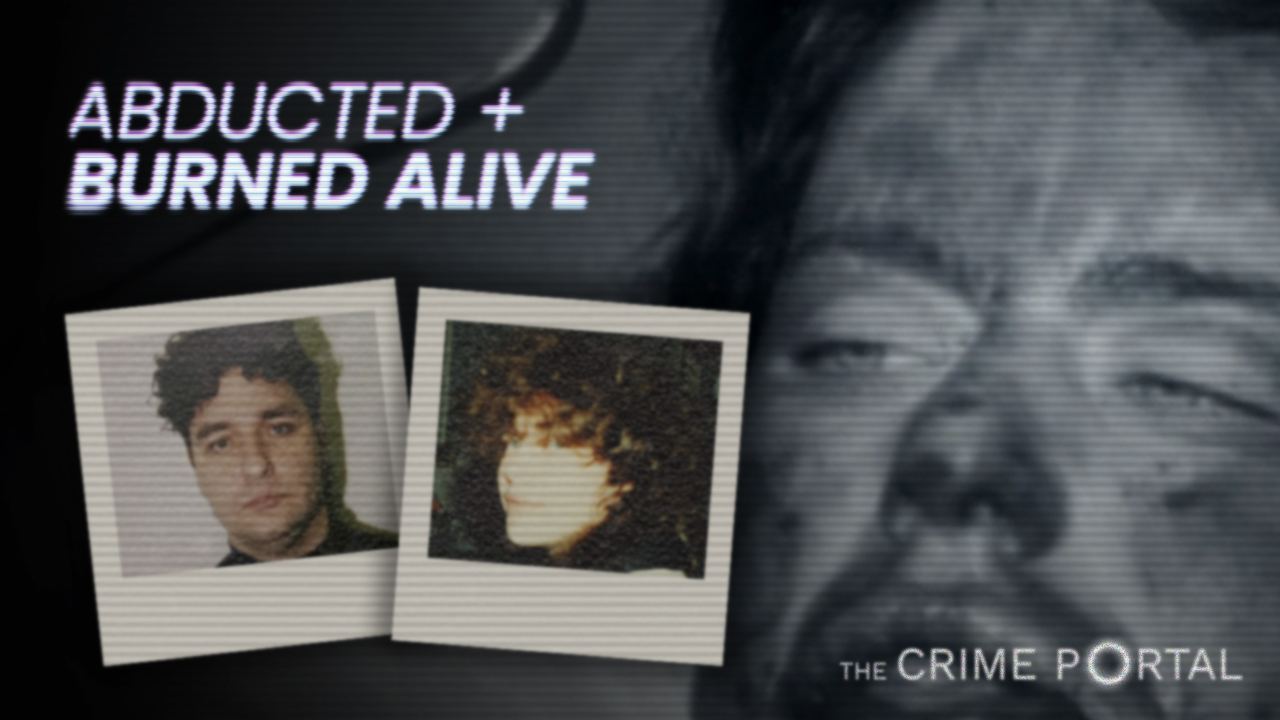
Case Summary
Shortly after 4.10pm on 23 December 1994, Eaton resident Robert Wilson was walking past Christ Church when he heard someone asking for help. On the steps he found a woman so badly burned that at first he could not understand what he was seeing. She told him that men had poured petrol over her and set her alight.
The woman was 31-year-old Tracy Mertens, a former school dinner lady and mother of two. She was taken to North Staffordshire Hospital with burns to approximately 95 per cent of her body. She remained alive for around twelve hours, slipping in and out of consciousness, and used that time to give police a remarkably detailed account of her abduction. She died in the early hours of Christmas Eve.
Tracy had probably burned for at least five minutes. Melted fragments of her jewellery and coins were later recovered near the church. The attack had taken place in daylight, yet nobody reported witnessing the moment she was set on fire. Eaton had no known place in her life, and the apparent randomness of the location initially deepened the mystery.
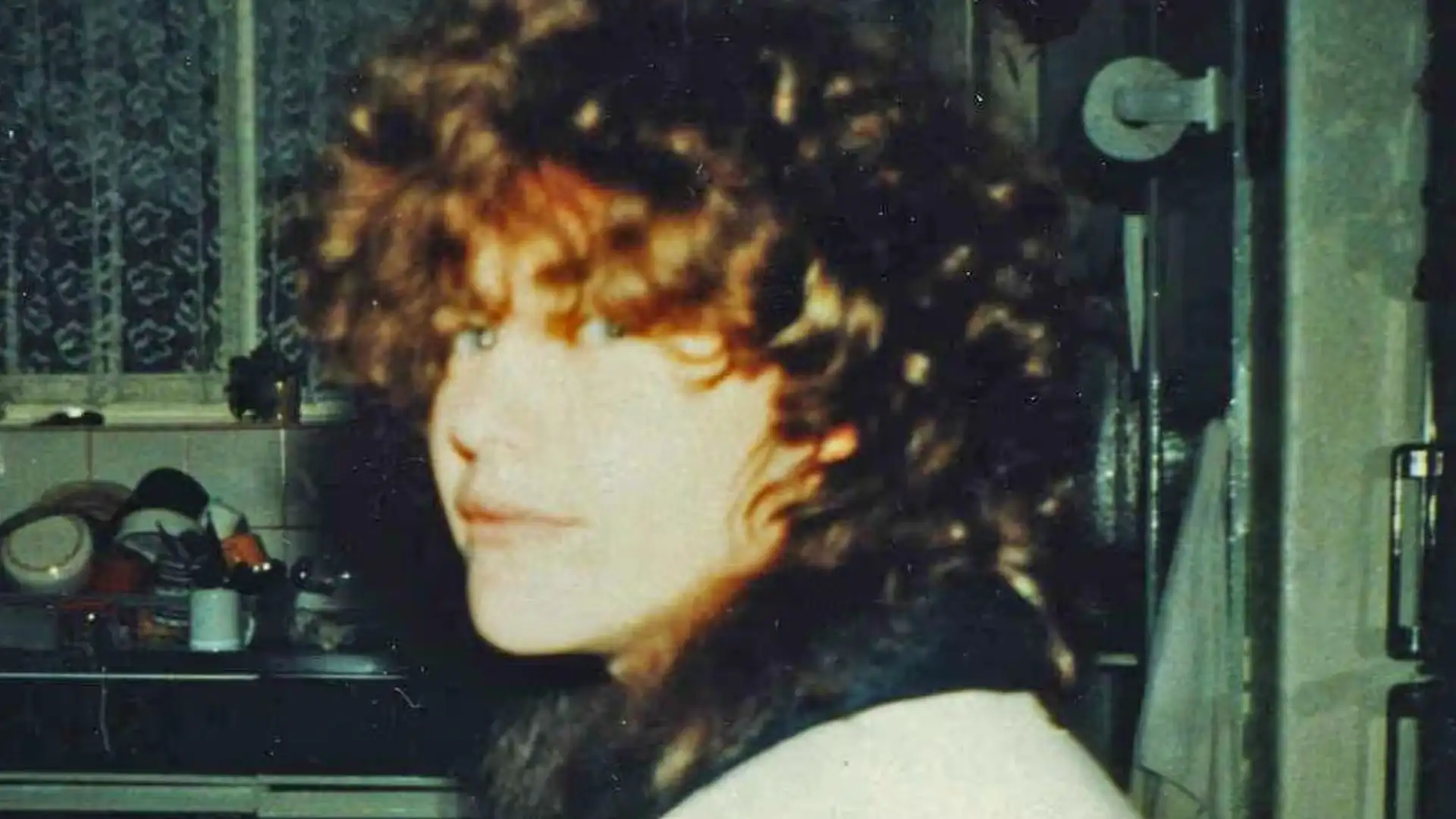
Taken from Cattells Grove
Only weeks earlier, Tracy had moved with her long-term partner, Joey Kavanagh, and their children, Daniel and Kelly, from Nechells in Birmingham to Rochdale. The couple had met when Tracy was 16 and had been together for about fifteen years. They planned to marry in March 1995, despite serious strains caused by Kavanagh’s drug addiction and the financial instability around it.
On 22 December, Tracy travelled back to Birmingham to see relatives and collect belongings from the family’s former home in Cattells Grove, including benefit books and post. She stayed overnight and went to the empty house the following day. Soon after she arrived, two men knocked at the door, forced their way inside and repeatedly asked, “Where’s Joey?” One searched the rooms. When they realised he was not there, they marched Tracy outside and pushed her into the rear of a yellow Mk II Ford Escort.
A passer-by saw the abduction and asked Tracy whether she was all right, but did not intervene. Police later issued a detailed description of him in the hope that he would come forward; he never did. The car itself was in poor condition and unusually distinctive, with a silver-coloured panel on the passenger side and a yellow soft toy fixed in a rear window.
Tracy was blindfolded and driven more than sixty miles north. She said her abductors were two heavy-set Black men, about 30 years old, between 5ft 4in and 5ft 7in, wearing dark leather jackets and caps. They spoke English with Birmingham accents and used another language during the journey, which investigators thought may have been Jamaican Patois. At Christ Church, one man restrained Tracy while the other poured petrol from a red five-litre can and struck a match. They then left her to die.

“They poured petrol on me and set me on fire.”
Tracy Mertens, speaking to her rescuer
A warning intended for someone else
Police found nothing in Tracy’s own life to explain such an attack. She did not use drugs, was devoted to her children and was described as well liked and private. The repeated questions about Joey pointed investigators towards his addiction and possible debts.
Kavanagh admitted regular use of crack cocaine and heroin, at times costing him around £80 a day. Police believed the family’s abrupt move to Rochdale had been prompted by money he owed within Birmingham’s drug trade, and they also considered reports that he had dealt drugs or been involved in other crime. Tracy had temporarily separated from him earlier in 1994. During that period, relatives noticed that she taped curtains together and sealed a letterbox, behaviour suggesting that she was frightened. She and Kavanagh later reconciled.
Kavanagh denied owing money when Tracy was killed and said the move north followed redundancy and Tracy’s wish to be closer to family. He was questioned repeatedly but never arrested or charged. Detectives nevertheless said over many years that they believed he knew more than he disclosed. The distinction is important: police did not accuse him of taking part in the murder, and no evidence placed him at the abduction or church.
Other details supported the theory of a debt-related warning. During the weeks when the Nechells house stood empty, someone had written the word “death” on a downstairs window. Police later learned of another Birmingham couple who owed drug money and were allegedly warned that they would “get what Tracy Mertens got” if they failed to pay. Eaton also lies roughly halfway between the family’s old and new homes, leading investigators to ask whether the church had been chosen as a meeting point. None of these clues has established why the abductors decided to burn Tracy rather than continue looking for Kavanagh.

Arrests, appeals and DNA
A seventy-officer inquiry began under Cheshire Police. The red petrol can was publicised and two Birmingham men were detained in January 1995. One, Derryck Sylvester Johnson, was charged with conspiracy to murder and held for almost three months before the case was dropped. He denied ever knowing Tracy or Kavanagh and alleged that officers had seriously assaulted him during his arrest. No one else has been charged.
The 1996 BBC documentary Tracy and Joey gave the case national attention but generated no major lead. Several officers said on camera that they thought Kavanagh was withholding information. He complained afterwards that the programme had unfairly blamed him, edited his answers misleadingly and brought abuse upon him and his children. The investigation team was scaled back later that year. An inquest subsequently recorded an open verdict, a decision that angered Tracy’s brother but which the coroner said reflected the criminal standard of proof required for unlawful killing.
Advances in forensic science offered new hope. Blood had been recovered from the Cattells Grove house and from the petrol can. Police preserved it until DNA testing became more sensitive, explaining that analysis would consume part of the limited material. By the time of a 2009 Crimewatch appeal, detectives confirmed that they had obtained a DNA profile capable of eliminating or linking suspects.
The programme also publicised the writing on the window and the threat made to another indebted couple. A further appeal in 2012 was described as producing a possible name for one of the killers and information about motive from an anonymous caller. Police urged that person to make contact again, but no arrest followed.

“We are satisfied she was an innocent party.”
Detective Superintendent Mick Holland, Cheshire Police
Over three decades without a resolution
Tracy’s children were 12 and 11 when she was killed. Their poems were released for the fifth anniversary, expressing the bewilderment of children growing up without their mother. Three decades later, Kelly described how every Christmas returns her to the murder and said she could not let go until someone was brought before a court. She also recalled that the night before Tracy left, her mother told her to go to her grandmother or aunt if anything happened—words that seemed ordinary to a child but troubling in retrospect.
Kavanagh died in 2020. Whatever he knew about the people searching for him can no longer be obtained directly from him. The two men described by Tracy would now be in their sixties, and the witness to the abduction older still. The distinctive car, the language used during the journey, the debt threats and the surviving DNA profile all offer possible routes to an identification, but none has yet broken the case.
By speaking through catastrophic injuries, Tracy gave investigators an account few victims could have provided. Her courage has not yet been matched by anyone willing to name the men. Whether planned from the start or improvised as punishment, the murder sent a message. The people for whom it was intended may remain best placed to explain it.
