
Case Summary
Sarah Benford was born on 19 March 1986 and grew up in Kettering with her mother Vicki, stepfather Gavin, brother Josh and sister Anya. Those who knew her described a confident, bubbly girl. She was also a child whose difficulties appeared early: social services first became involved when she was very young, school attendance became irregular, and by the age of eight she had begun running away from home.
The death of an uncle to whom Sarah was close affected her deeply. As she entered her teens, she drank, used drugs, self-harmed and spent time with adults involved in theft and drug use. Her mother eventually agreed to place her in local-authority care because she believed it offered the best chance of keeping her safe.
It did not. Sarah moved through three children’s homes, ending up at Welford House in Northampton. During 150 days in care she was recorded as missing for 41 of them. She told staff about having sex with adult men and returned from one absence saying the same. At 14, Sarah was below the age of consent. These were disclosures of possible child sexual exploitation, not evidence that she had chosen an adult occupation or lifestyle.
The way adults interpreted Sarah’s behaviour would later be identified as a fundamental failure. Running away, intoxication and contact with older men were treated largely as misconduct. They were also clear signs that a child was in danger.

The last time her mother saw her
Sarah left Welford House on Friday 31 March 2000 and was found two days later. On Tuesday 4 April she absconded again. The home reported her missing, but her established pattern meant that the response lacked urgency.
On the morning of 6 April, Sarah appeared at an amusement arcade in Kettering town centre where Vicki was present. Sarah was heavily intoxicated. She said she had begun taking heroin, refused to return to the children’s home and argued with her mother. Before leaving she said she would see Vicki the following day.
Later that day, Sarah telephoned from a house on Hampden Crescent, not far from the street where she had grown up. Vicki contacted Northamptonshire Police and asked officers to collect her. Records disclosed later showed police telling care-home staff that they would not pick Sarah up or take her to Kettering police station to be “babysat”. Sarah was under the care of the local authority and had already been missing for days, yet the chance to place her somewhere safe was allowed to pass.
There were several reported sightings around Kettering afterwards. Police ultimately said they regarded sightings up to 19 April as credible, but found little evidence that Sarah survived for more than two or three months. She was five feet seven inches tall, with blue-green eyes and an amateur cross tattoo on her upper left arm. When last seen she had an orange fleece, black padded jacket, dark patchwork jeans, cream trainers and a navy-and-green rucksack.

A slow response becomes Operation Yacht
For months, much of the pressure to find Sarah came from her own family. Vicki searched streets and parks. Sarah’s grandmother, June Black, contacted the local press, helped secure publicity and kept the case visible. Rewards were offered and reported sightings were checked, including accounts that Sarah had travelled to north London or visited a support centre in Wellingborough. None established a new life elsewhere.
National attention grew only gradually. Her image appeared on lorries and supermarket milk bottles, and television appeals followed. In early 2003, nearly three years after she vanished, a team of 25 officers was assigned to a renewed investigation. Crimewatch featured the case and police began revisiting addresses and people associated with Sarah.
In September 2003, Northamptonshire Police formally declared that they were investigating murder. Officers reasoned that a 14-year-old with Sarah’s needs could not have lived independently for years without leaving a trace in health, welfare or police systems. The inquiry, Operation Yacht, focused on dozens of people in her circle and eventually consumed tens of thousands of police hours. Eight people were arrested at different stages of the investigation. All were released without charge.
Major searches followed at houses in Kettering and London, at Finedon Sidings, and in Weekley and Wakerley woods. Police used ground radar, specialist dogs and extensive excavation. The searches found no remains and no evidence sufficient to prosecute anyone.
The failures identified after Sarah vanished
While the murder inquiry expanded, Northamptonshire’s child-protection agencies were forced to examine how Sarah had been treated before she disappeared. An independent review completed in 2004 found understaffing, failures to follow proper safeguarding procedures and repeated missed opportunities to recognise her as a child at risk.
Its most important conclusion concerned language and attitude. The label of a “troubled adolescent” had masked the dangers around Sarah. References to possible prostitution obscured the fact that adult men were having sex with a child who could not legally consent. Her drug use, absences and self-harm should have increased the protection around her; instead, they helped normalise her repeated disappearance from care.
The review made eight recommendations, including better child-protection training and round-the-clock arrangements for returning children who absconded. Northamptonshire County Council overhauled its procedures and issued an unreserved public apology. The reforms were necessary, but they arrived too late for Sarah. Operation Yacht was scaled back in August 2004, and her family held a memorial service that November without a body to bury.
Sarah’s case became a stark example of the unequal urgency once attached to missing children in care. The question was not only why she vanished, but why so many warning signs had failed to provoke a protective response before she did.
“We have never given up trying to find her body and, potentially, tracing her killer or killers.”
Northamptonshire Police, 2021 appeal
The search has never ended
Cold-case detectives have repeatedly returned to the evidence. In 2016, new intelligence led to a search of woodland near Warkton. Officers found an old handgun but said there was no evidence connecting it to Sarah. A private team searched a Kettering garden in 2017 after ground-penetrating radar detected cavities; excavation found nothing.
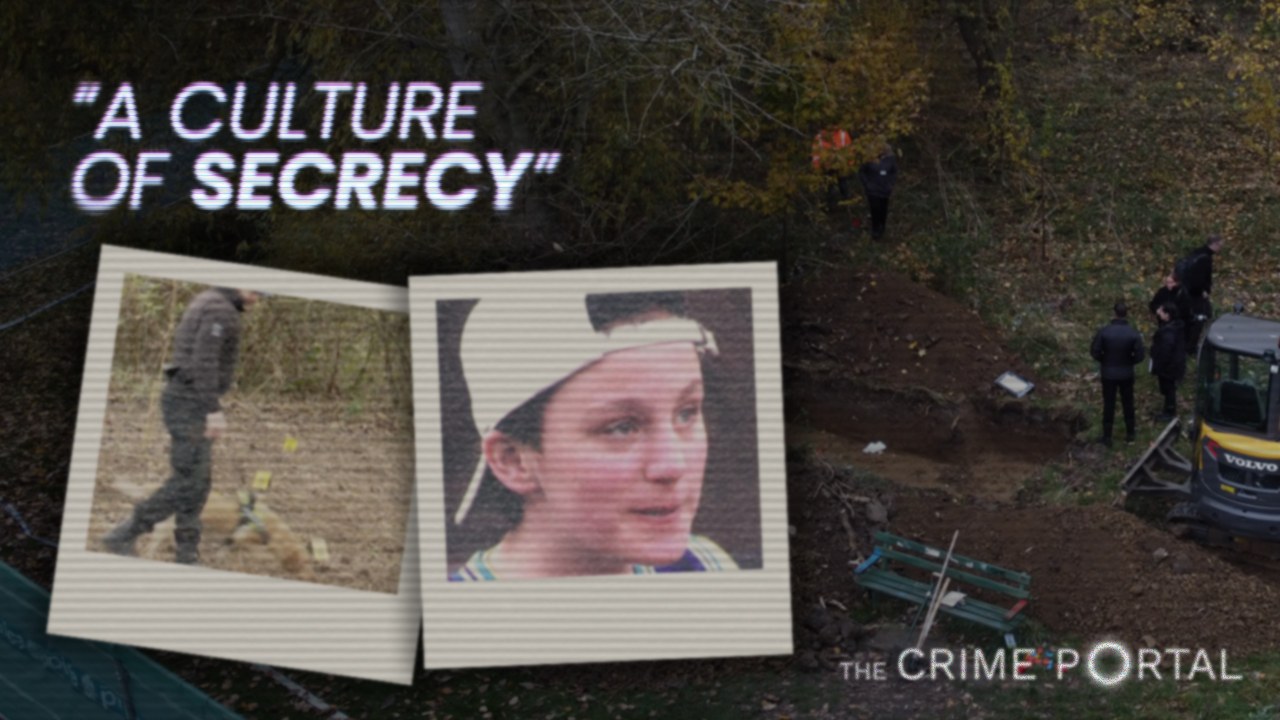
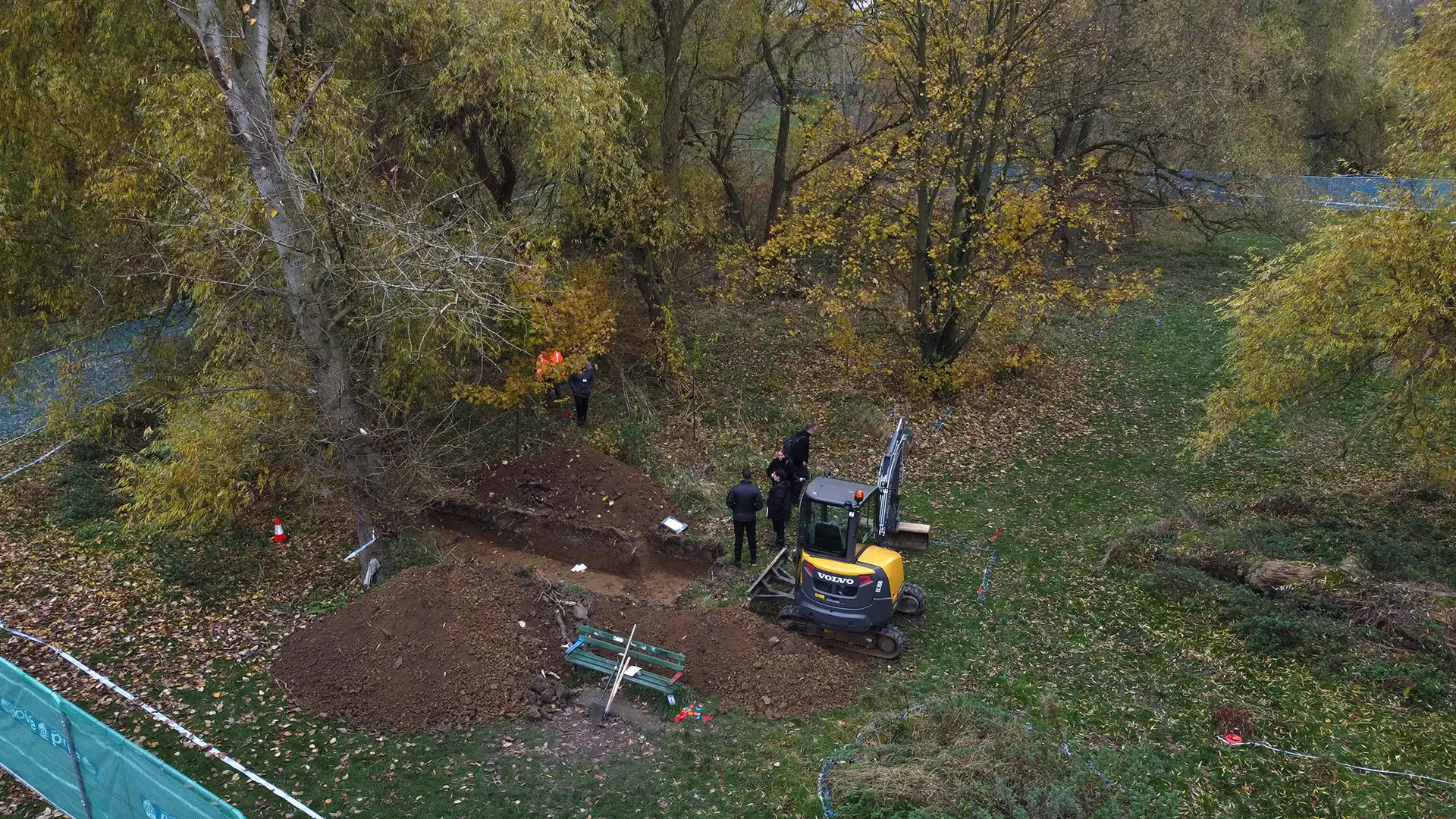
In November 2021, information from a member of the public prompted a large two-week search near Valley Walk in Kettering. Police sealed a 70-by-70-metre area and carried out forensic excavation, again without finding Sarah. The force said the intelligence had been credible and that further leads generated by the operation were still being examined.
The repeated searches reinforce where investigators believe the answer lies: among the people and places Sarah knew in and around Kettering. They do not establish how she died, where her body was taken or who was responsible. Former lead investigator Charles Moffat later described the failure to find her as the greatest regret of his career.
Sarah should now be remembered as a woman in her forties. Instead, every appeal returns to the same photograph of a 14-year-old girl. Her case remains an unsolved suspected murder and an enduring account of institutional failure: a vulnerable child disappeared after the adults responsible for her safety had already been given many chances to see the danger.
