
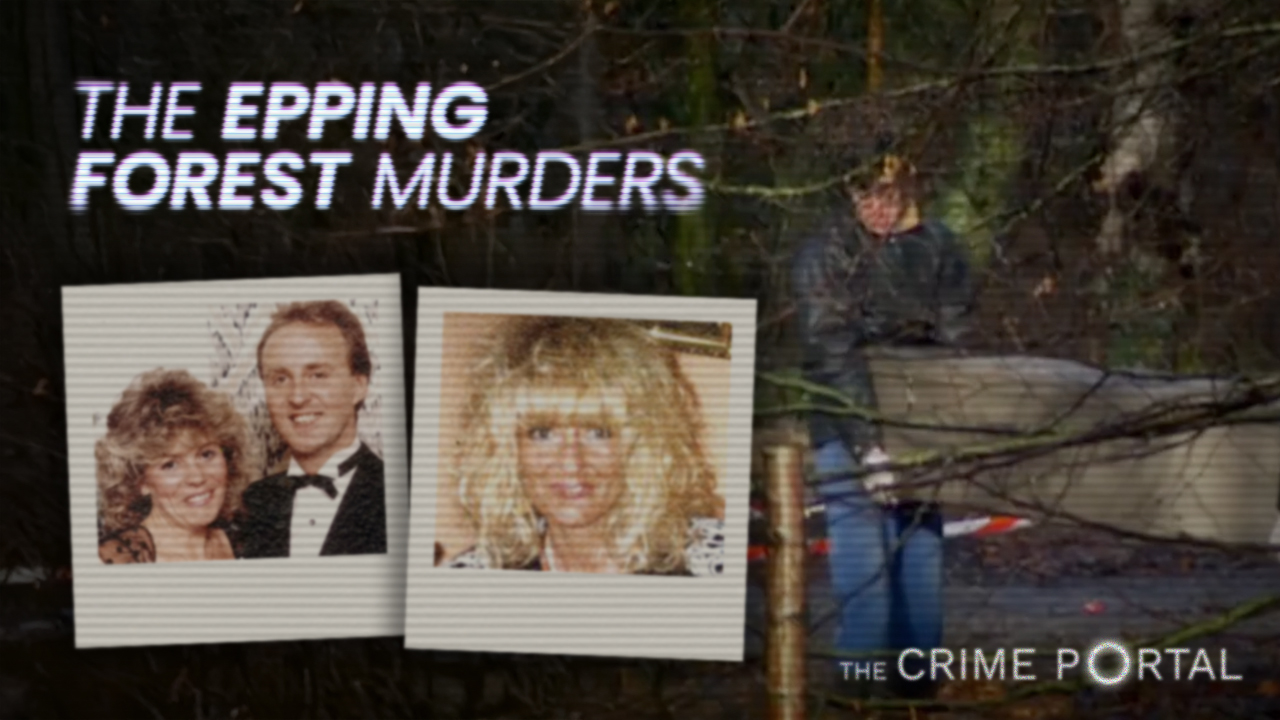
Case Summary
On the morning of 24 June 1990, walkers on Copped Hall Green near Upshire noticed a white Volkswagen Golf GTI Cabriolet parked beneath a tree. By early afternoon, a group of ramblers decided to look more closely. Inside was a woman in a mauve evening dress, slumped over the driver’s seat with fatal head injuries.
The car belonged to Patricia Lee Parsons, known as Lee. She was in her early forties and lived in Friern Barnet. Neighbours knew her as friendly, house-proud and a keen gardener. Lee owned several properties, worked part of each week at a Camden massage business and privately as a high-end escort under the name Debbie. Police knew this from the beginning, although it was not immediately reported.
Lee had been beaten and had three deep puncture wounds to her head. Detectives believed a crossbow was the most likely weapon, an extraordinary method in a country where crossbow killings were extremely rare. No bolts were reported as recovered. She had not been sexually assaulted, and police thought she was killed at or close to the place where the Golf was found.
The manner of death, the absence of an obvious spontaneous confrontation and the way Lee had left home led the senior investigator to conclude that the killing was premeditated. What he could not identify was a motive.

The final evening—and the missing diary
Lee had been in a two-year relationship with Ozzie Hussein and helped finance his Turkish restaurant in Harlow. The couple spent 23 June preparing for a private function. Lee drove home to change and collect flowers, telling Ozzie at 6pm that she would return for the 7.30 event.
A neighbour saw Lee leave at about 7.30 and return roughly half an hour later. Nobody knows where she went. When Ozzie called again around 8pm, Lee said she had good news to tell him but did not want to explain it over the phone. Ozzie thought she sounded as if she had been asleep, despite having only just arrived home. It was their last conversation.
At around 8.30, a neighbour heard a man arguing loudly with Lee. Near 9pm, the front door slammed and Lee was seen getting into the passenger side of her Golf. An unknown fair-haired white man took the driver’s seat and drove away. No vehicle that might have brought him to Firs Avenue was noticed.
Other unexplained sightings surrounded both locations. A smartly dressed Black man briefly pulled onto Lee’s drive and appeared to signal towards the house. Near Upshire, two men with distinctive cars talked for hours. None appears to have been traced.
Police believed an answer might lie among Lee’s escort clients. A diary said to contain about 200 names, including prominent professionals, could not be found. Whether the killer removed it, it was innocently lost or it even contained the details attributed to it is unknown. Its absence has fuelled theories of blackmail and obsession.

“This is one of the most fascinating cases I have ever worked on. One theory was that the answer to who killed Patricia Parsons, and why, would be found in her diary. It was rumoured to have contained the details of a top judge, TV presenters, barristers and accountants. However, it could not be found.”
Detective Inspector Bob Mahoney, Metropolitan Police
Two bodies in a Mercedes
Six months before Lee’s death, another execution-style crime had taken place only a few miles away. On the evening of 23 December 1989, 39-year-old accountant and pub stocktaker Terry Gooderham was having dinner with his girlfriend of seven years, insurance executive Maxine Arnold, at her flat in north-east London. They were supposed to meet Maxine’s mother for a drink but never arrived.
The couple appeared to have left abruptly. Their meal was unfinished, the fire and Christmas-tree lights remained on, and Maxine’s handbag and Terry’s wallet were left behind. During a 6.45pm call, Maxine sounded hurried and said she needed to take Terry somewhere. Whether they left willingly is unresolved.
Witnesses saw a Mercedes being driven erratically near Epping Forest, its lights flashing as if someone inside sought attention. Before 4am, police found Terry’s car in a Lodge Road car park with its engine running. Terry and Maxine had been shot from behind with a 12-bore shotgun. Maxine had tried to shield herself, and police believed Terry was killed first.
Cocaine found in the car initially encouraged rumours about drugs, but police treated it as a false lead. Maxine was not connected to crime. Terry was found to have had another relationship, but detectives did not consider that relevant. Like Lee, the couple had apparently been drawn away from home and killed with chilling control, leaving little recoverable evidence.

Professional killings and organised-crime claims
Police examined whether the cases were related. Their proximity, six-month interval and execution-like methods invited comparison, but no direct evidence has linked them. By 1992, senior officers were discussing both among suspected contract killings in London. They did not claim one gunman was responsible, only that the crimes appeared planned and professionally carried out.
Later reporting concentrated on Terry’s work around pubs. It was alleged that he kept accounts for people connected to the Clerkenwell crime syndicate and learned about stolen lorry loads supplied under criminal “protection”. The theory was that Terry knew too much or intended to speak to police; Maxine was killed because she was with him.
A retired detective, Mick Randall, said an underworld informant supplied four suspects’ names in January 1990. He said the intelligence named former Kray associate Connie Whitehead as the person who authorised the murders. A police record found years later appeared to confirm that information had been logged but not passed to the murder squad. Whitehead denied involvement until his death in 2023; other alleged participants are dead or deny the claim.
These accounts offer a coherent theory but have not produced charges and have never been tested before a jury. The Metropolitan Police says the double murder has been periodically reviewed, including by cold-case and anti-corruption teams, but that the evidence has not allowed the case to proceed.

“Our appeals on these murders have fallen on deaf ears. The reason for this is fear.”
Chief Superintendent Bill Peters, Metropolitan Police
Cold-case work without a conviction
Lee’s case appeared on Crimewatch, generating almost a hundred calls, many naming local crossbow owners. A cold-case review began in 2003 and included DNA samples from family and friends, but no match was found. In 2007, police interviewed around fifty people and reported important new information.
The review led to the only arrest in Lee’s murder. Colin Rosenheim, 58, was questioned on suspicion that he and another man carried out the killing. He denied involvement and was released. No public explanation has been given for the arrest or why the case went no further.
The similarities between the cases remain striking but may be superficial. The leading theory in Terry and Maxine’s deaths concerns information acquired through pub bookkeeping and organised crime. The possibilities in Lee’s case are broader: a client, a personal dispute, information learned through her work, the unexplained “good news” she intended to share, or a contract arranged for a reason still unknown. A crossbow attack also differs fundamentally from the shotgun murders.
What joins the victims most securely is not a proven offender but the calculated way they were drawn from home and killed in Epping Forest. Terry may have been the intended target; Maxine appears to have died because she was beside him. Lee probably knew, or felt compelled to accompany, whoever drove her car. Identifying those arrangements matters more than forcing the crimes into one theory.
