
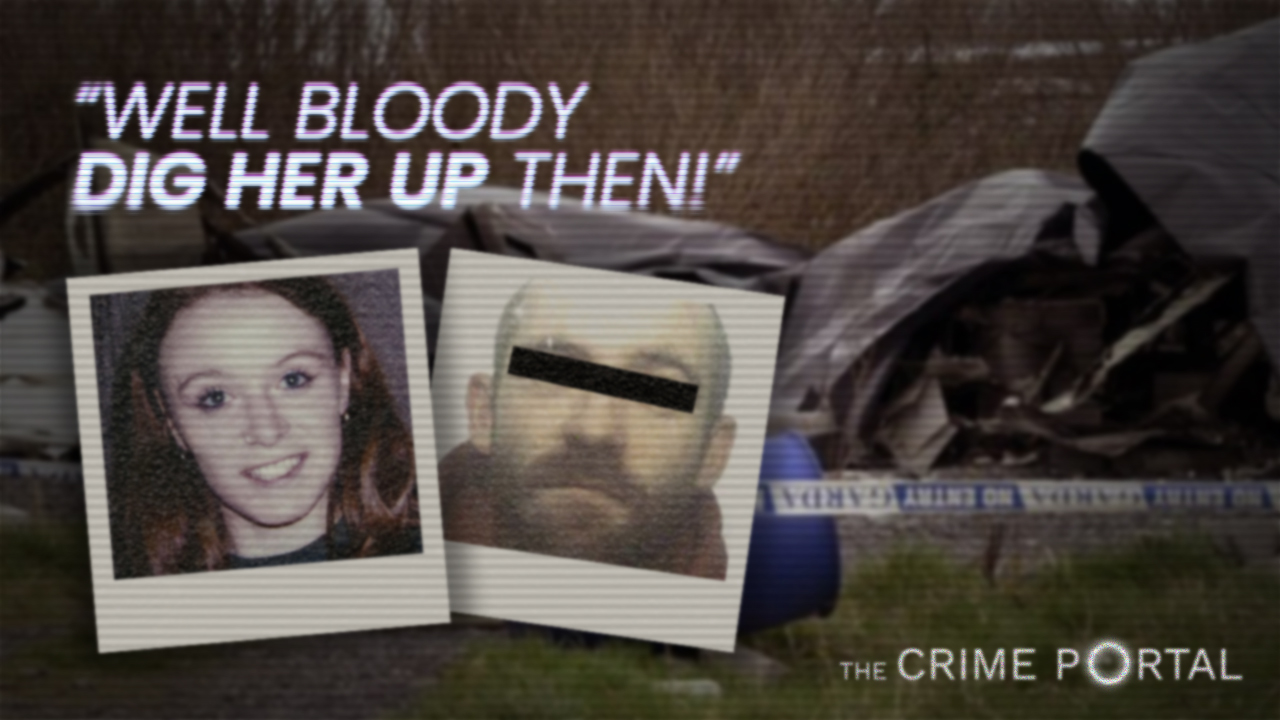
Case Summary
Emer O’Loughlin was born in February 1982 and grew up around Ennistymon in County Clare. The youngest of four children, she was especially close to her father, Johnny, after her parents separated. He remembered her following him everywhere as a child. She loved animals, photography, drawing and painting, and was rarely without a creative project.
Emer began a relationship with her childhood sweetheart, Shane Bowe. The couple spent two years in the Netherlands and travelled through Thailand before returning to Ireland to settle down. They placed a mobile home on land belonging to Shane’s family at Ballybornagh, planning to save enough to build a permanent house. The remote landscape suited Emer, who walked with her dogs, sketched plants and photographed the countryside.
In 2004, she enrolled on an art course at Galway-Mayo Institute of Technology. By the spring of 2005 she had been accepted to the National College of Art and Design in Dublin for the following September. At 23, the uncertain period after school had resolved into a clear direction.

The burned mobile home
On Friday 8 April 2005, Emer’s college was closed for the funeral of Pope John Paul II. The electricity supply to the mobile home she shared with Shane had failed again and her telephone battery was flat. Before leaving for work, Shane suggested she ask their only nearby neighbour if she could use his power.
That afternoon, Shane received a call saying the neighbour’s mobile home was on fire. He returned shortly before 4pm and found it largely destroyed. His own home was intact, but Emer was nowhere to be seen. Her car remained outside; her keys, purse and camera were inside; and the couple’s dogs were loose, something she would not normally allow. The only missing personal item was her telephone.
In the debris, Shane thought he could see bones. A doctor confirmed they were human, though the fire had damaged them beyond immediate identification. Emer’s father and brothers searched the surrounding countryside as daylight faded, already fearing what DNA testing would confirm four days later: the remains were hers.
The initial post-mortem could establish only that the body was that of a young woman. It could not give a cause of death. A curved kukri-style knife was recovered from the wreckage, but the significance of the weapon was not resolved publicly. Gardaí treated the death as suspicious rather than murder, a distinction that Emer’s family found impossible to accept.
“She went everywhere with me. She was like my shadow.”
Johnny O’Loughlin, Emer’s father

John Griffin disappears
The burned mobile home belonged to 36-year-old John Griffin, originally from Mervue near Galway. He was known to Gardaí through assault convictions and violence towards women, and local accounts described Emer as afraid of him. Officers located Griffin in Galway on the evening of the fire. He said he had not been at Ballybornagh since the previous day and had stayed with a relative.
Three days later, Griffin travelled to Inis Mór and barricaded himself inside the ancient cliff-top fort of Dún Aonghasa. He threw stones at passers-by and threatened to jump. After a long standoff, Gardaí removed him and took him to a psychiatric hospital in Ballinasloe.
Five days later, having shaved his hair and beard, Griffin discharged himself. He returned to Inis Mór under a false name. Authorities found his clothes neatly folded at the cliff edge, but no body. Searches by land, air and sea found nothing, and there was no record of him taking the public ferry back to the mainland. Investigators believed he had staged his death and escaped by private boat, possibly with help.
Despite Griffin’s disappearance and the publicity surrounding his behaviour, police did not initially publish his name or photograph. Emer’s family argued that this decision squandered the period when public sightings were most likely. Three other people were arrested on suspicion of withholding information and released without charge. Griffin remained wanted for questioning but was not yet publicly called a murder suspect.

Exhumation reveals a violent death
In 2010, a serious-crime review reconsidered the original investigation. Emer’s sister Pamela pressed Gardaí to resolve the uncertainty over cause of death, even if it required exhuming her sister. The family consented, and Emer’s remains were removed from her grave in Ennistymon for examination by pathologist Michael Curtis and forensic anthropologist Lorraine Buckley.
Modern imaging identified cut marks around the neck vertebrae. The finding showed that Emer had suffered a violent attack before the fire. The case was formally upgraded to murder, confirming what her family had said for five years. Her remains were reinterred two days later.
That summer, an Interpol warrant finally named John Griffin and released his photograph. Then 43, he was also known as “Fozzy” and had used the name John McDermott. He had a distinctive tattoo on the front of his neck. Gardaí believed he might have travelled through Britain, Germany, the Netherlands or Spain and later said he was probably living in mainland Europe under an assumed identity.
A substantial reward and international appeals followed. Reported sightings placed Griffin in several countries, while later inquiries traced parts of his route after the fire, including a possible stay in a Scottish rehabilitation facility. None led to an arrest or a confirmed current location. The people who helped him leave Inis Mór—or supported him afterwards—have never been publicly identified.

“We’re just hoping for justice. Nothing can bring her back.”
Johnny O’Loughlin, Emer’s father
A suspect known, but not found
The basic police theory is that Emer went to Griffin’s mobile home because she needed electricity to charge her telephone or restore power. Her father has wondered whether she saw something there that Griffin did not want her to see. Investigators believe she was attacked inside and the home was burned in an attempt to destroy the evidence. The kukri recovered from the ruins remains an obvious potential weapon, although Gardaí have not publicly said that it caused the marks found at the second post-mortem.
Unlike many cold cases, the principal challenge is not the absence of a suspect. Griffin’s history, ownership of the scene, behaviour immediately afterwards and disappearance made him the focus of an international warrant. Those facts are highly suspicious, but he has never been questioned under arrest, charged or tried. A complete case still requires admissible evidence and the opportunity to test his account.
Emer’s family has campaigned for years, criticising the early focus on Shane despite his work alibi and the delay in naming Griffin. Shane erected a wooden memorial cross at Ballybornagh in 2006 and died in 2018. Emer’s mother also died without seeing an arrest. Pamela contacted tattoo artists internationally in the hope that someone had covered or altered Griffin’s distinctive neck mark, while the Justice for Emer campaign kept her sister’s face in public view.
The fire destroyed much of the physical evidence, but it did not erase the questions around Griffin’s movements. Someone may have supplied transport from Inis Mór, documents, money or accommodation; someone may know the name he uses now. Finding him would not itself prove the murder. It would, however, allow the investigation to confront the one person whose home contained Emer’s body and who vanished as soon as Gardaí began to look closely.
