
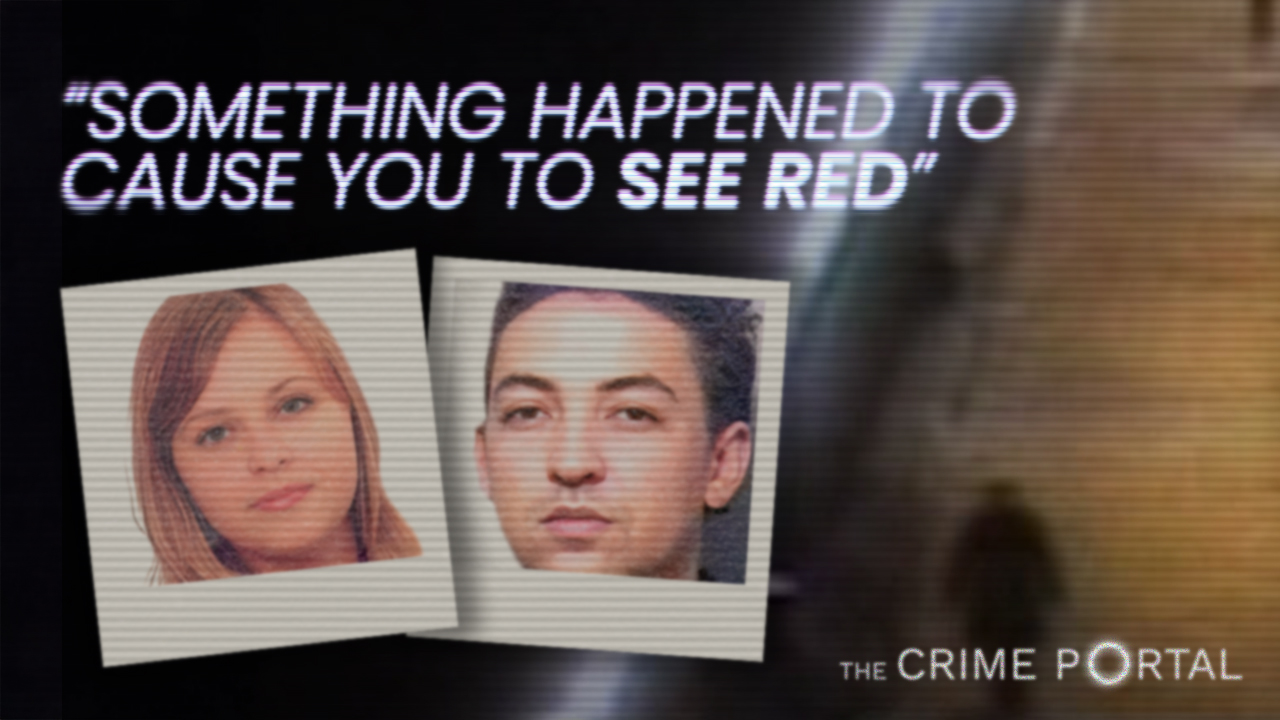
Case Summary
On the evening of 13 December 2005, a couple walking through Priory Country Park in Bedford found a woman’s coat, scarf and trainers arranged neatly at the edge of Priory Lake. Nobody was nearby, and they had not seen a person enter the water or a vehicle arrive. When the belongings were still there on their return, they called police.
Six weeks later, on 24 January 2006, a group of schoolchildren on the water saw a woman’s body floating in the lake. She was identified as 26-year-old Kamila Garsztka, a Polish accountant living in Bedford. The clothes found in December were hers.
The post-mortem examination could not determine how Kamila died. Drowning was ruled out because there was no water or silt in her lungs, and there were no obvious injuries showing an assault. After weeks in the lake, investigators had to rely largely on personal accounts, telephone records and CCTV.
By then, Kamila had been reported missing by her boyfriend, Amilton Nicolas Bento, known as Nico. Her handbag, mobile telephone and bank card were in his room. Those possessions—particularly the bag—would eventually turn a suspicious death into a murder prosecution.

Depression, Brighton and a failing relationship
Kamila and Nico met at work in 2003 and later lived in a shared house on London Road with members of her family. In September 2005, Nico rented a room in Rutland Road. He said Kamila chose to remain with her recently arrived brother while he settled in Britain, but friends believed the couple’s relationship had deteriorated.
Kamila was also struggling more generally. A housemate described her as severely depressed, crying and saying that nothing in her life was right. She resigned from a cleaning job on 6 December and spoke about leaving Bedford, finding work elsewhere and, on earlier occasions, suicide. Her family said her Catholic faith made suicide unlikely.
On 12 December, after a hostile exchange of messages with Nico, Kamila bought a single ticket to Brighton. She spent almost five hours there. She told relatives she was looking for work, but in calls from the seafront said she was fed up with Bedford, mentioned cold seawater and sounded uncertain. She nevertheless took the late train home.
Nico collected Kamila after midnight. He said they watched a film, had sex and slept, and that he left for work late the following morning after buying breakfast and arranging repairs to his car. This, he maintained, was the last time he saw her. CCTV at 7.46pm on 13 December showed a woman accepted as Kamila walking along the Embankment towards Priory Country Park.

“She never mentioned anything about taking her own life. I do not believe that is something she would do.”
Lukasz Garsztka, Kamila’s brother
The handbag in a blurred image
The prosecution argued that the Embankment footage showed Kamila carrying her handbag across her body. Because the same bag was later found in Nico’s room, police reasoned that he must have met her after the camera recorded her, killed her and taken it home. The grainy image became the centre of Operation Maroon.
Several British specialists urged caution. John Kennedy said the footage was too poor for a reliable conclusion and that only a reconstruction under the original conditions could test for the bag. Police did not perform one before trial. Instead, Las Vegas analyst Casey Caudle enhanced the footage and testified that a strap and bag were visible.
There was other circumstantial evidence. Prosecutors cited Nico’s inconsistent accounts of finding the bag, his descriptions of Kamila’s mental state and his focus on Priory Lake during the search. He denied arranging to meet her or visiting the lake that night, and said he cooperated because he wanted her found.
No physical evidence placed him with Kamila in the park. There was no known murder method and no proved cause of death. At his 2007 trial, the prosecution’s ability to connect the recovered bag to the CCTV image supplied the apparently objective fact that transformed the remaining suspicions. Nico was convicted unanimously and sentenced to life imprisonment with a minimum term of fourteen years.

A conviction undone by the evidence that secured it
Independent specialists later dismantled Caudle’s interpretation. Grant Fredericks, an experienced forensic video analyst and FBI National Academy lecturer, concluded that the supposed strap was space between Kamila’s body and the shadow of a bench. Other analysts agreed that the footage did not support a confident claim that she carried a bag.
In December 2008, the scene was reconstructed with the original cameras still in place, equivalent seasonal lighting, an officer of similar build and a matching bag. She walked the route both with and without it. Fredericks considered the result definitive: Kamila did not appear to be carrying the bag in the original footage. A technical reviewer associated with Caudle disputed whether the lighting was truly comparable, but the prosecution accepted that the conviction could not stand.
The Court of Appeal quashed Nico’s conviction in February 2009 and ordered a retrial, observing that there was other circumstantial evidence a jury might consider. The Crown later decided not to proceed and formally offered no evidence; a not-guilty verdict was recorded. Nico had spent more than two years in prison.
Caudle’s broader credibility had collapsed by then. He was accused of making false claims about his policing career, expelled from his professional association and died by suicide in 2008. Kennedy said he had raised concerns before trial and resigned when the issue was not resolved, while the Forensic Science Service disputed how those concerns had been presented.

“When I first saw the images, there was no support for the concept that Kamila was carrying a handbag.”
Grant Fredericks, forensic video analyst
An undetected death and a damaging statement
After the prosecution ended, Bedfordshire Police issued a statement saying its inquiry had found no evidence that Kamila killed herself and would remain an unresolved murder investigation. Because Nico had just been acquitted and no alternative suspect was identified, he argued that the wording implied police still considered him guilty.
He brought a libel claim. The police defence itself stated that the release conveyed the view that a retrial could reasonably have ended in his conviction. Nico was ultimately awarded £125,000 in damages. He later returned to Portugal and has continued to say that he wants to know what happened to Kamila.
The case remains within the regional major-crime unit’s cold-case cycle as an “undetected murder”, though the medical evidence never established homicide or a cause of death. Two broad possibilities persist. Kamila may have died through suicide or misadventure during a period of depression, with post-mortem changes obscuring the mechanism. Alternatively, she may have met someone at the park and been killed in a way that left no obvious injury. Neither account explains every detail, including why her clothes were placed neatly beside the lake, why her body contained no signs of drowning, or how her bag returned to Nico’s room.
The central lesson is evidential as much as personal. A single ambiguous image was presented with greater certainty than the pixels could bear, and that certainty carried a man to prison without establishing how Kamila died. Once it was removed, the remaining facts could not sustain a prosecution. The cold-case task is therefore not to restore the discarded interpretation, but to find genuinely new evidence capable of explaining Kamila’s final hours on its own terms.
