
Case Summary
Shortly before 1pm on Saturday 29 July 2006, a motorist stopped on Hedsor Lane near Wooburn Green, Buckinghamshire. A short distance inside the woods he saw smoke and then discovered a woman’s body burning against a tree. The fire had been started with an accelerant, apparently to destroy evidence and prevent identification.
A post-mortem examination found that the woman had died from repeated blows to the head before she was set alight. Her body had been wrapped in patterned fabric, believed to be a bedsheet, and remnants of a red fleece were recovered. She had not inhaled smoke, confirming that the fire was an attempt at concealment rather than the cause of death.
Police had no name to begin with. They released a forensic reconstruction and details that might be recognised: the woman was a young adult with brown or henna-coloured hair, a coiled-snake ring on one middle finger and a tattoo of a rearing winged horse on her upper right arm. Her dental work, including a white crown, was of good quality and was circulated to dentists. Detectives also appealed for information about a dark van seen near the lane.
The injuries later revealed the force of the attack. A pathologist counted 21 patterned wounds to the scalp, apparently caused by a heavy object with a threaded or screw-like surface. A steering lock was suggested in press reports, but the weapon has never been conclusively identified.

Exhibit A: Case image for the Beata Bryl investigation. Source: The Crime Portal archive.
The woman on the Underground
The first major breakthrough came from CCTV. At 11.30pm on Friday 28 July, a woman matching the victim was recorded at Leytonstone Underground station in east London—around 40 miles from the woods and little more than 12 hours before the body was found.
She wore grey cropped trousers, white trainers and a red Adidas jacket with lettering across the front. The jacket was consistent with fibres recovered at the scene. She carried a light-coloured JanSport backpack and a white carrier bag from the clothing chain MK One. Neither bag has ever been recovered.
Further enquiries identified the woman as 23-year-old Beata Bryl, known to her family as Bibi. DNA confirmed the identification in September. Earlier footage showed Beata withdrawing £15 from a Nationwide branch and travelling through Leyton on the afternoon of 28 July. After she boarded a westbound train from Leytonstone late that night, her route disappeared from view.
A Crimewatch appeal in 2007 filled in one possible fragment. A caller remembered hearing Beata tell someone on a mobile phone that she was going to a place in west London. Police did not disclose the location, but believed it might be near the place she was killed. Their working view was that Beata died elsewhere and was then driven to Hedsor Woods.

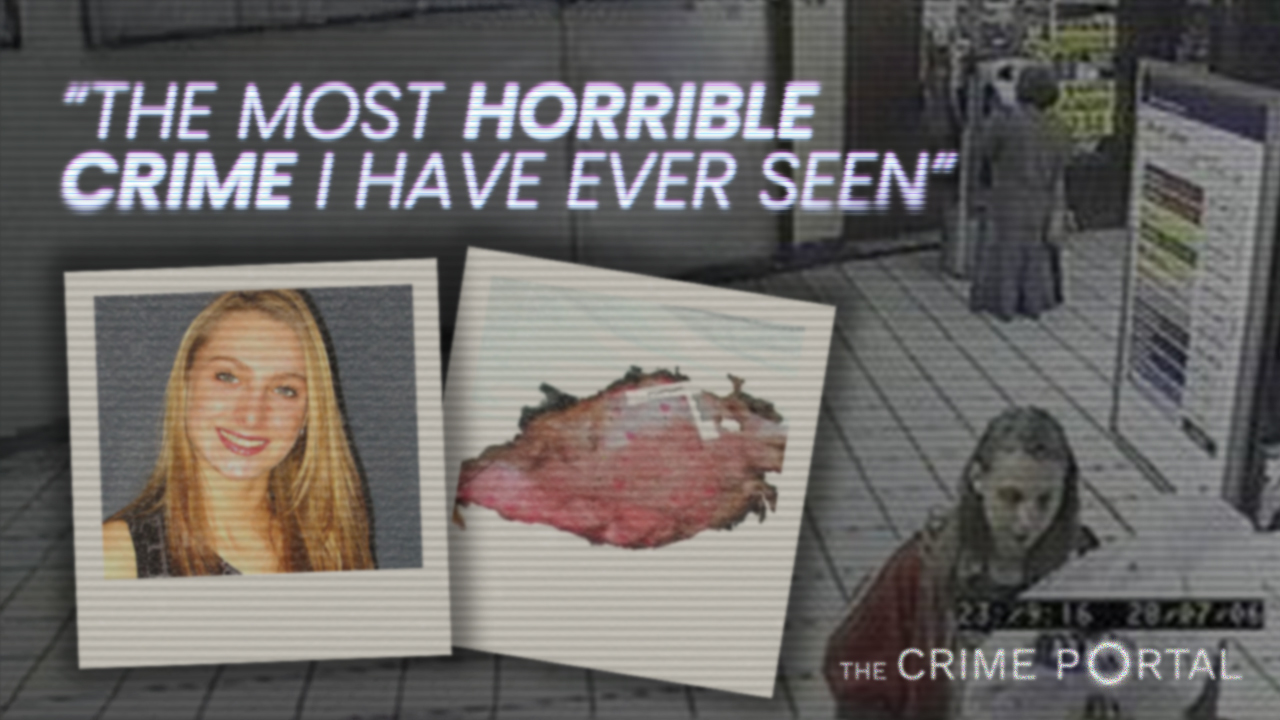
“It is the most horrible crime I have ever seen.”
Chief Inspector Colin Seaton, Thames Valley Police
The life Beata sought in Britain
Beata was born in Gliwice, southern Poland, on 27 February 1983. She spoke fluent English and had long wanted to build a life in Britain. After working for a time in Germany, she moved to the UK in 2003 and initially told her mother Maria that she was happy, earning money in catering and security work and travelling with a boyfriend.
Maria later described a troubling change. Beata spoke of being beaten, threatened and controlled by an older man. She returned to Poland in 2005 looking thin, frightened and exhausted after a period of serious mental ill health, but later went back to London. Her mother believed she had become trapped in exploitation or trafficking. Police investigated Beata’s contacts and made more than 20 arrests over the life of the inquiry, yet none led to a charge.
The last conversation between mother and daughter took place on 27 July 2006. Maria said Beata sounded terrified and warned that somebody had threatened to kill her and might also harm the family. The call is one of the most significant pieces of context in the case, although it did not identify the person Beata feared.
After the murder, Maria faced the additional distress of raising the money needed to bring her daughter home. Donations organised with the Catholic charity Caritas eventually paid for repatriation, and Beata was buried in Gliwice in October 2006.

Reconstructing the final journey
The investigation concentrated on the missing hours between Leytonstone and Wooburn Green. Police distributed appeals to commuters, released stills of 25 passengers they hoped to identify and handed out flyers along the route Beata had taken. They wanted to know who had met her, whether she changed trains, and how she travelled from London to Buckinghamshire.
The distinctive sheet wrapped around her body became another key line of enquiry. Viewers recognised the design after it was shown on Crimewatch, and police said it had been identified, but no public account connected it to a purchaser or address. The snake ring, tattoo, clothing fibres, patterned injuries and bags all offered promising detail without producing the chain of evidence needed to name a killer.
At Beata’s 2007 inquest, the coroner recorded unlawful killing. Tests found no evidence of sexual assault. Reports also stated that detectives had ruled out certain theories concerning sex work and organised crime, but the precise motive has never been made public. A £10,000 reward was later increased to £25,000, and Crimestoppers separately offered money for information, without a breakthrough.

A case with many fragments and no charge
In 2014, Thames Valley Police released longer CCTV footage from Leytonstone to renew the appeal. It showed Beata alone with her two bags, moving through the station and boarding the train. Officers again asked members of London’s Polish community to recall where she had lived, who she knew and who might have had access to the distinctive bedding.
The case is difficult not because it lacks evidence, but because its evidence remains disconnected. Police know Beata’s movements during parts of her final day. They know she expected to travel west, that she feared somebody, that she was killed with a patterned heavy object and that her body was wrapped, transported and set alight. What they do not have is a proven location for the murder, the vehicle used, the missing possessions or a person against whom those details converge.
More than 20 people were arrested, but no one has been charged with Beata’s killing. Her mother’s trafficking theory has never been proved or disproved publicly. The unanswered question is therefore still the simplest one posed by the CCTV: who was waiting beyond the Underground cameras when Beata left Leytonstone that night?
